Your Delivery History Could Be Your Greatest Sales Advantage
By Karl Connor 3 min read
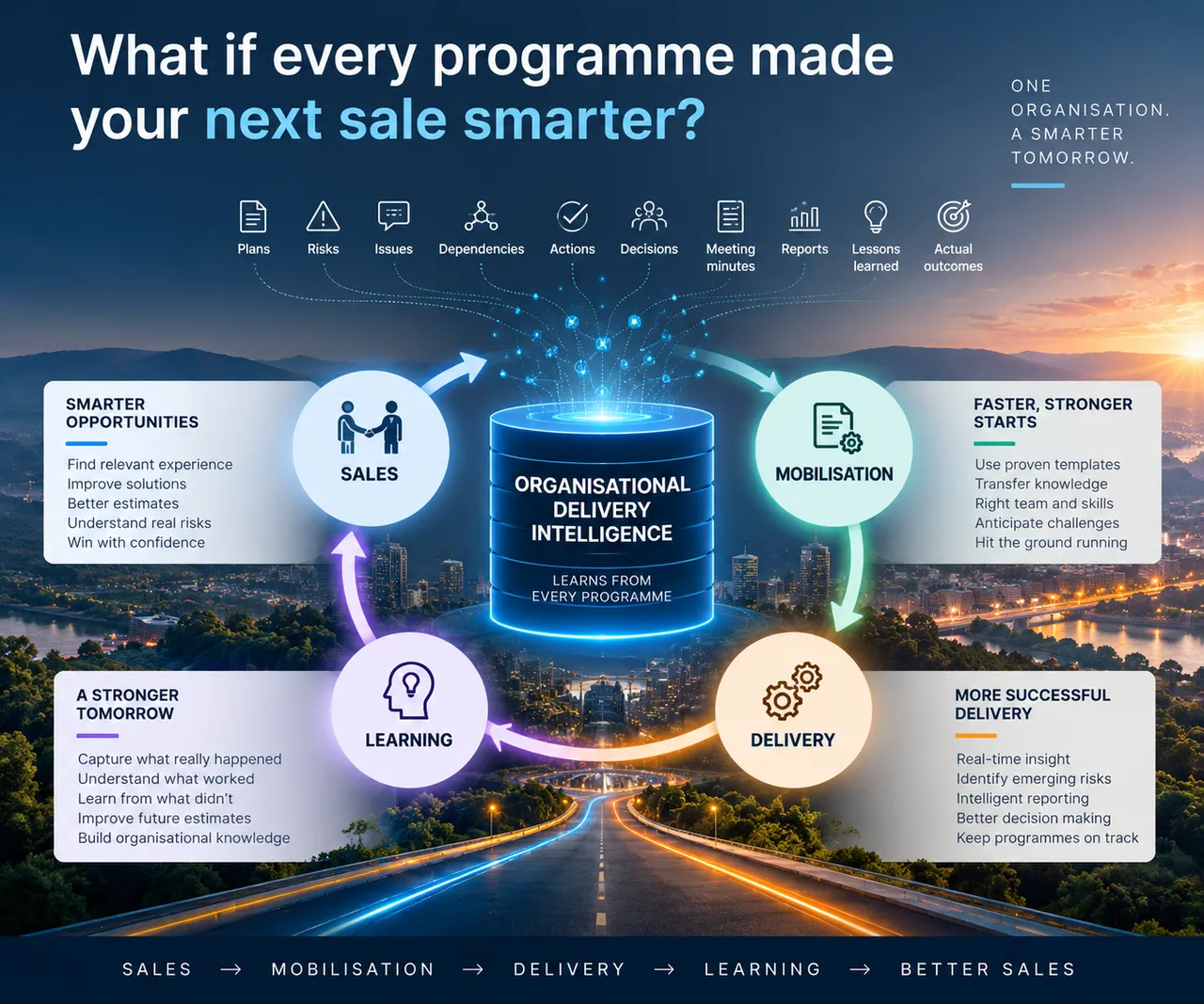
Every project and programme generates knowledge that could make the next client opportunity easier to win, more accurately priced and more successfully delivered. Yet in many organisations, that knowledge is scattered across plans, spreadsheets, reports and people's heads.
The question is not whether the information exists. It is whether anyone can use it when it matters.
What do we really know about previous delivery?
When a new opportunity comes through sales, we often start by asking people what they remember. Who delivered something similar? How long did it take? What resources did we need? What were the difficult parts?
That is useful, but it is hardly a reliable institutional memory. The people involved may have moved on. The original estimate may be buried in a proposal. The reasons for schedule changes may sit in meeting minutes rather than the final lessons-learned report.
Imagine being able to interrogate the organisation's actual delivery history instead:
- What did we estimate, and what did it actually cost?
- Which milestones slipped, and why?
- Which risks materialised and which assumptions proved wrong?
- What capabilities and capacity did delivery really require?
- What should we do differently next time?
From project records to organisational intelligence
A connected knowledge layer could bring together estimates, actuals, plans, dependencies, risks, decisions, meeting records and delivery outcomes. With appropriate access controls and reliable data, AI could help find comparable work, surface recurring patterns and challenge assumptions before a commercial commitment is made.
This is not about allowing an algorithm to set prices or make commitments without human judgement. It is about giving sales, solution and delivery leaders better evidence for the decisions they already make.
The opportunity extends beyond sales
The same knowledge should follow the opportunity through mobilisation and delivery. A risk recognised during bid shaping should not vanish at handover. An assumption in the proposal should become something the delivery team can test. Actual results should be captured so that future estimates improve.
Sales → Mobilisation → Delivery → Learning → Better Sales.
That is a more valuable cycle than filing away a lessons-learned document and starting again.
Why this matters
I've spent much of my career working on complex transformation programmes. The repeated challenge is not a shortage of information; it is the difficulty of connecting information across teams and time.
The next step for programme management is to treat delivery history as an organisational asset. Not simply a record of what happened, but evidence that can improve what happens next.
Spreadsheets are still rocking. But they should not be our organisational memory.
From insight to action
These are some of the challenges that informed Blue Squircle, an independent enterprise delivery intelligence platform. Blue Squircle helps teams manage delivery, make informed decisions and reuse organisational knowledge across programmes, projects, product development and sales. Explore the approach on the Blue Squircle overview.
Explore the platformThe views expressed are my own. Examples are illustrative and do not describe confidential client programmes. No employer endorsement is implied.
Karl Connor
Programme & Transformation Director. PRINCE2, SAFe Agile. Founder of Blue Squircle.